


EV calculator – how much more cost-effective an electric car is compared with a combustion-engine car
If you are unsure whether running an electric car is more cost-effective in the long run than a combustion-engine car, this calculator will help you quickly and clearly compare the key cost items and make an informed decision.
Additional benefits:
- Free electric car parking in “Rīgas Satiksme” and Liepāja municipality car parks
- Permitted to use public transport lanes, saving time in traffic jams
- Free entry to the city of Jūrmala
Disclaimers and assumptions:
- The comparison uses Subaru combustion-engine cars and electric cars in equivalent trim levels. Prices are based on current SIA TC Motors offers on the day of the comparison.
- The calculation period is a 5-year leasing term, and the total costs are calculated according to the selected annual mileage.
- Leasing is a 5-year finance lease with a 10% down payment. The leasing rate for a combustion-engine car is 4.2% (1.89% + 6-month Euribor), and for an electric car 3.70% (1.49% + 6-month Euribor).
- EKII grant is the planned state support for buying an electric car under the approved support programme.
- Energy includes the fuel and electricity costs of the cars selected for comparison. The electricity price used in the calculations is 0.15 EUR/kWh, excluding distribution components, whose costs depend on the connection capacity used and are not directly related to consumption.
- The fuel price is loaded dynamically from degvielaskalkulators.lv for 95-octane petrol.
- The consumption figures are combined figures determined and declared by the manufacturer in accordance with WLTP procedures.
- Taxes are the vehicle operating tax, determined according to the emissions of the car selected for comparison.
- Maintenance costs are set as a total amount for the entire leasing period, depending on the selected annual mileage.
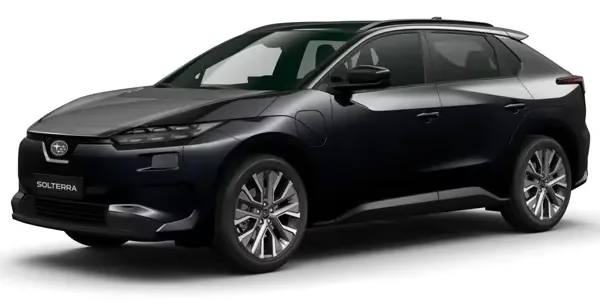
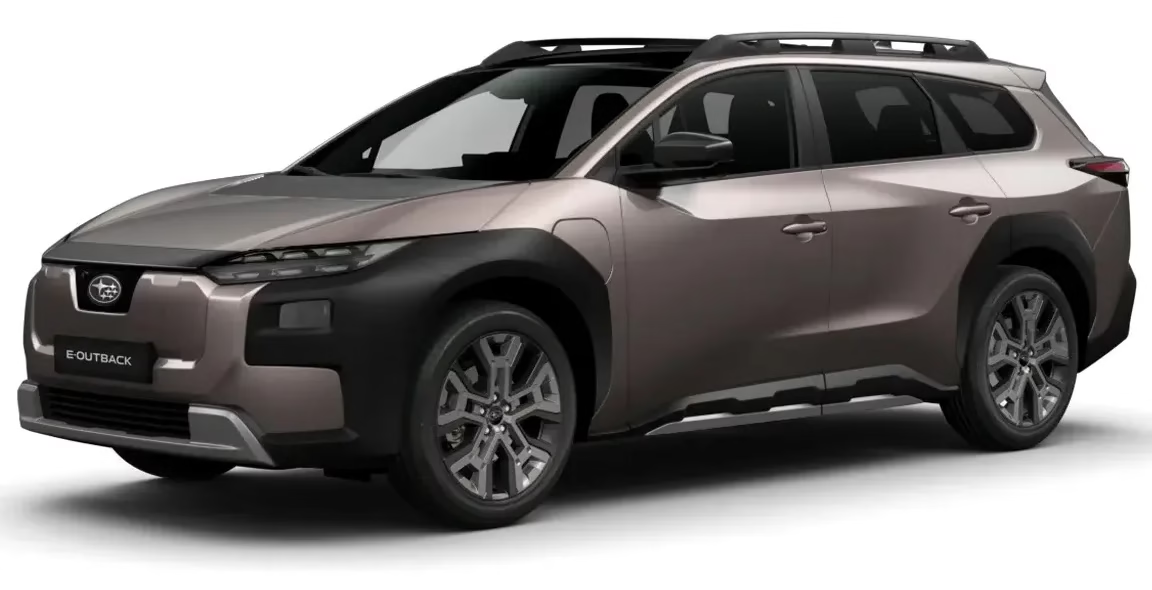
OUR NEW ELECTRIC CARS

FAQ – frequently asked questions about electric cars
Is an electric car more cost-effective than a petrol or diesel car?
Yes, in most cases the running costs of an electric car are lower. Electricity usually costs less than fuel, and there is less maintenance, as there is no need to change engine oil, oil and air filters and other running components of a petrol or diesel engine. The exact savings depend on annual mileage, electricity price and charging habits.
How much does it cost to charge an electric car?
It depends on the battery capacity and the electricity price. When charging at home, a full charge often costs several times less than a full tank for a petrol or diesel car. At public fast-charging stations, the costs are usually higher, but it is still cheaper than fuel for a combustion-engine car.
How far can you drive on a single charge?
Modern electric cars usually offer a range of approximately 300–600 km according to the WLTP standard. The real distance depends on the battery capacity, driving speed, air temperature, terrain, driving style and other factors.
How long does it take to charge an electric car?
With home charging, a full charge usually takes several hours, while at DC fast-charging stations many electric cars can be charged from 10% to 80% in about 20–40 minutes.
How does an electric car perform in winter?
Electric cars work reliably in winter, but the range decreases in cold weather – in severe frost by as much as half. However, these figures improve every year and frost affects batteries less.
How long does an EV battery last?
Manufacturers often provide an 8-year or 160 000 km battery warranty. In practice, batteries often last much longer and still retain most of their original capacity after several hundred thousand kilometres. To ensure battery longevity, every car manufacturer recommends following its guidelines for everyday use and battery charging.
Is electric car maintenance cheaper?
Yes. Electric cars have a simpler design than combustion-engine cars, so there is no need for engine oil changes or regular replacement of spark plugs, fuel filters or many other parts. This reduces maintenance costs.
Can an electric car be charged at home?
Yes. Most electric car owners charge their car at home every day. This can be done from a standard socket or with a specially installed Wallbox charger, which provides faster and more convenient charging.
Is an electric car suitable for long journeys?
Yes. The public charging network is developing rapidly in Latvia and Europe, so longer journeys can be planned without significant difficulty. Modern navigation systems often automatically suggest the most suitable charging stops.
Is an electric car safe?
Yes. Modern electric cars are designed to strict safety standards and often achieve the highest safety ratings in independent Euro NCAP tests. The batteries are equipped with several protection systems against overheating and damage.